
Career Transitions & Personal Strategy for Women 55+ of age: A Workshop in Greece
Career Transitions & Personal Strategy for Women 55: A Workshop in Greece
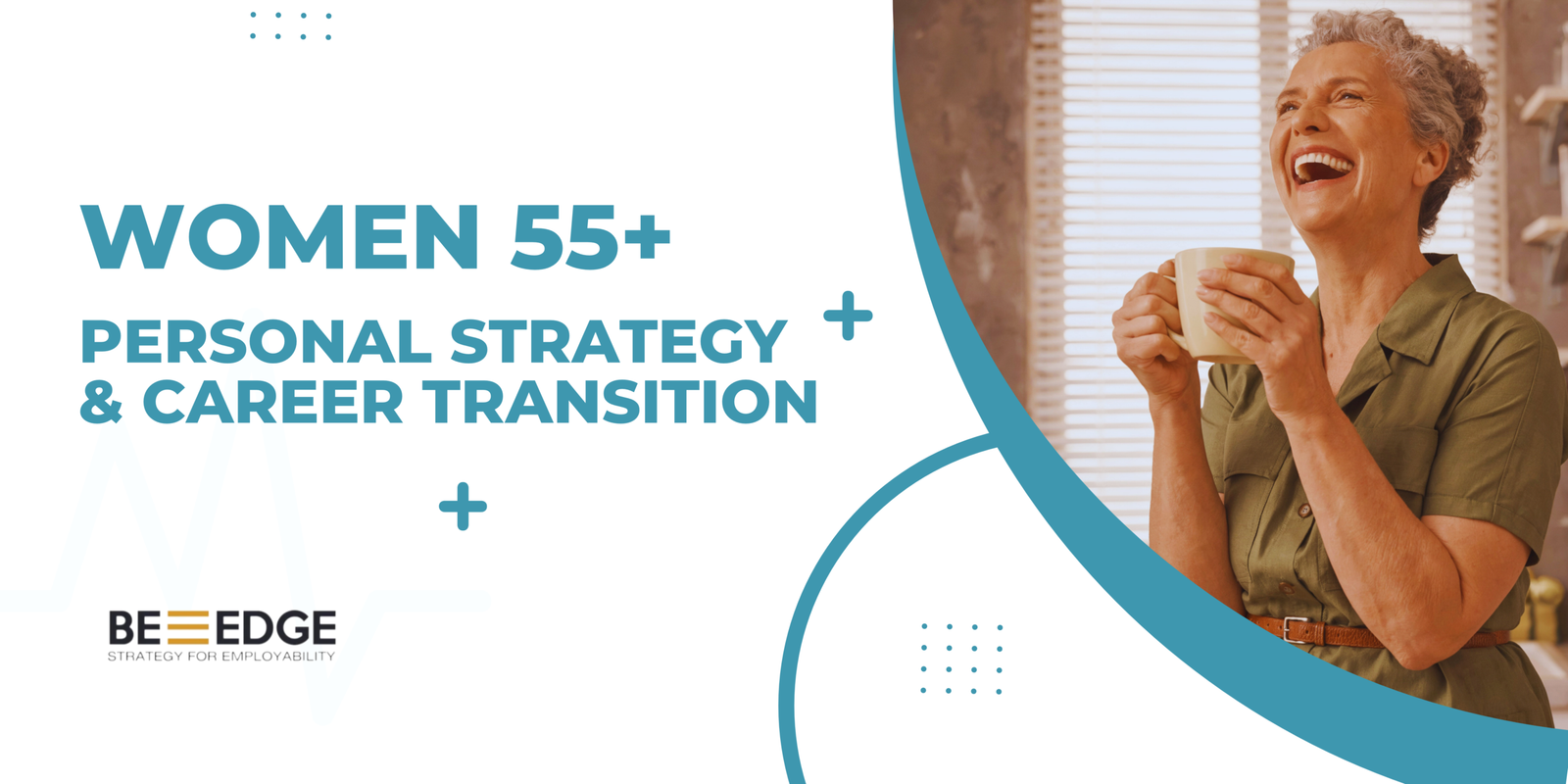
In May, a group of women aged 55 and over gathered in Greece for a focus group project development workshop focused on one important question:
What comes next?
The workshop brought together women navigating personal and professional transitions at a stage of life that is often overlooked in discussions about career development, employability, and lifelong learning.
While career programs frequently focus on students, graduates, or early-career professionals, many experienced professionals find themselves facing equally important turning points later in life. Retirement timelines are changing. Careers are becoming longer. New opportunities continue to emerge well beyond traditional career milestones.
This workshop explored how a Personal Strategy can help individuals navigate these transitions with greater clarity and intention.
Why Personal Strategy Matters During Career Transitions
Many professionals reach a point where they begin asking questions that are less about jobs and more about direction.
Questions such as:
- What do I want my next chapter to look like?
- Where can I contribute most effectively?
- How do I position decades of experience in a changing environment?
- What opportunities align with my values and goals?
A Personal Strategy helps answer these questions.
Just as an organization develops a positioning strategy to guide decisions and allocate resources, individuals can develop a Personal Strategy to guide professional and personal choices.
The goal is not simply to identify the next opportunity.
The goal is to create a framework for evaluating opportunities over time.
Building a Personal Strategy Through Shared Experience
The workshop combined focus group discussions with project development exercises.
Participants had the opportunity to reflect on previous experiences, identify strengths, explore future possibilities, and discuss common challenges associated with life and career transitions.
One of the strengths of the format was the ability to learn from others facing similar questions.
Many participants discovered that while their professional histories were different, their challenges often shared common themes:
- Reinvention
- Visibility
- Confidence
- Purpose
- Community
- Future contribution
The group setting provided a space where participants could test ideas, receive feedback, and gain new perspectives on their own trajectories.
Personal Strategy and the Future of Work
The workshop also highlighted a broader trend.
The future of work is often discussed in terms of technology, automation, and emerging industries. Yet demographic change may prove equally important.
People are working longer.
Many professionals are choosing second careers, consulting work, entrepreneurship, volunteering, mentoring, and project-based engagement long after traditional career milestones.
The Future of Jobs Report from the World Economic Forum consistently emphasizes the importance of adaptability, lifelong learning, resilience, and continuous skills development.
These capabilities are relevant not only for young professionals but also for experienced professionals navigating new opportunities.
This makes Personal Strategy increasingly important.
Career transitions no longer occur once or twice in a lifetime.
For many people, they occur repeatedly.
Employability Investment Beyond Early Career Stages
A recurring theme throughout the workshop was the idea that employability is not limited to securing employment.
Instead, employability can be viewed as an ongoing investment in a person’s ability to create value, contribute meaningfully, and pursue opportunities aligned with their goals.
This perspective connects directly to the broader concept of Employability Investment, which views development as a process involving individuals, educational institutions, employers, and communities.
Participants explored how previous investments in education, experience, relationships, and expertise could continue creating value in new contexts.
Many discovered that capabilities developed over decades remained highly relevant when reframed and positioned differently.
A Growing Community of Lifelong Learners
This workshop also introduced an important new audience for BE-EDGE.
Women navigating mid-career and later-career transitions represent a rapidly growing population with unique experiences, strengths, and development needs.
Their questions differ from those of recent graduates.
Yet the underlying challenge is often similar:
How do I convert who I am, what I know, and what I have experienced into future opportunities?
The answer frequently begins with strategy.
More than 200 individuals have already participated in Personal Strategy programs through BE-EDGE initiatives, helping build a growing community focused on intentional career development and lifelong contribution. (Participant count should be verified before publication.)
Continuing the Journey
Individuals interested in exploring their own direction can begin with the free Positioning Strategy Assessment.
From there, participants can continue into Becoming a Case Consultant, the introductory step of the ConsultPro Accelerator, where strategy is translated into action through real-world projects and professional engagement.
Organizations supporting women in career transitions, alumni development, workforce initiatives, lifelong learning programs, and professional reinvention are also encouraged to connect.
If your university, public agency, employer, association, or professional network serves women navigating career transitions, we would welcome a conversation.
For workshops, speaking engagements, or partnership opportunities, please contact:
info@be-edge.com
