
Archives

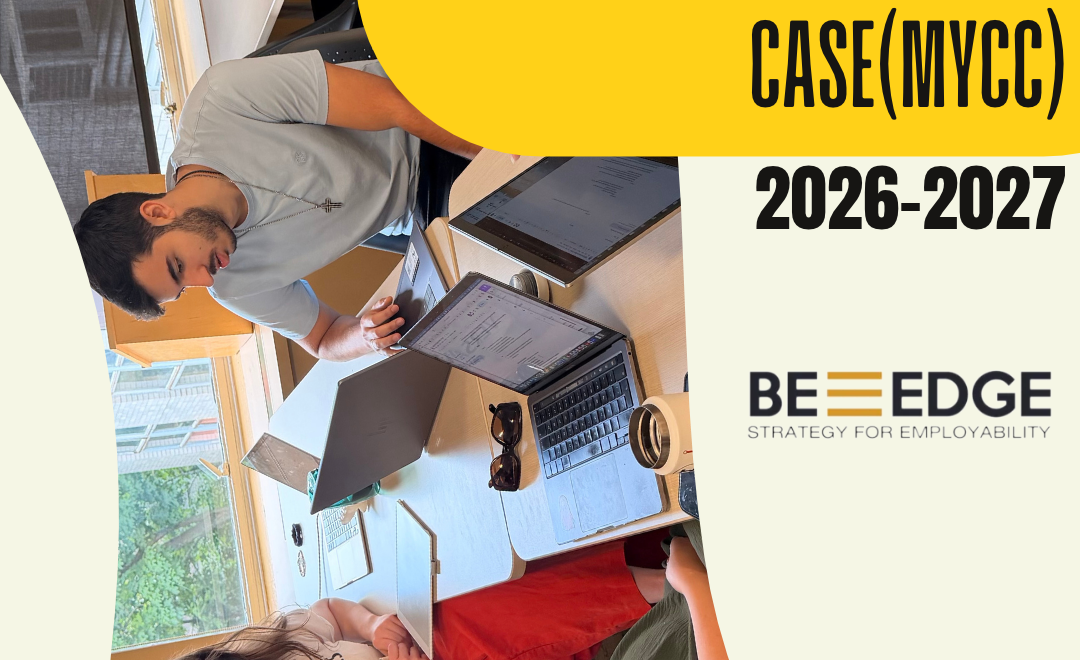
Participants in the Making Your Consulting Case competition developing consulting recommendations for real organizational challenges

2026–2027 “Making Your Consulting Case” Competition: Key Dates and How to Take Part

Making Your Consulting Case Competition 2026-2027: Turning Experience into Employability Investment

Employers frequently ask candidates to demonstrate analytical thinking, problem-solving ability, communication skills, and business judgment. Yet traditional resumes often provide only indirect evidence of these capabilities.

The Making Your Consulting Case (MYCC) Competition 2026-2027 was designed to address that challenge.

Organized in partnership with the Western Casewriters Association (WCA), the Journal of Case Research and Inquiry (JCRI), and ConsultPro Accelerator, the competition invites instructors, students, and practitioners to create consulting cases based on real organizational challenges. Rather than analyzing a pre-written business case, participants identify a real challenge, connect with an organization, gather information, develop recommendations, and document their consulting process.

In doing so, participants create something a resume alone cannot provide: evidence.

Why Making Your Consulting Case Matters

Many professionals struggle to demonstrate the value they can create before they are hired.

A consulting case changes that.

Participants move beyond describing their knowledge and instead show how they apply it to a real problem faced by a real organization. The result is a tangible demonstration of strategic thinking, research capability, communication skills, and professional judgment.

For employers, consulting cases provide richer evidence than traditional credentials alone. For participants, they create a portfolio asset that can support career transitions, industry entry, professional growth, or consulting aspirations.

Making Your Consulting Case as an Employability Investment

In my 2024 article, Making Your Consulting Case as a Tool for Employability Investments, I argued that consulting cases function as an important form of employability investment.

An employability investment creates value beyond a single course, project, or credential. It contributes to a person’s career capital and strengthens future opportunities.

Making Your Consulting Case provides participants with:

  • A structured consulting process
  • Industry connections
  • Portfolio-ready work
  • Professional visibility
  • Recognition as a case consultant
  • Potential publication opportunities

Outstanding consulting cases may be invited for publication through a special issue of the Journal of Case Research and Inquiry (JCRI).

What Participants Create in Making Your Consulting Case

Consulting cases can address challenges in any industry, organization, or functional area. Each submission consists of four parts:

Case Proposal

The proposal defines the consultant’s expertise, client organization, business challenge, and planned sources of information.

Company Case

This section introduces the organization, industry context, key challenges, and decision-making environment.

Consulting Report

Participants analyze the problem, apply relevant frameworks, and develop recommendations designed to create value for the client.

Case Brief

The brief summarizes the challenge, proposed solution, and expected outcomes, providing a concise portfolio artifact that participants can share professionally.

Making Your Consulting Case Competition Timeline

The 2026-2027 competition cycle includes the following key dates:

  • October 1, 2026 – Case Proposal Submission*
  • January 10, 2027 – Consulting Case Manuscript Due
  • March 1, 2027 – Finalists Submit Case Brief for the Case Gallery
  • March 10, 2027 – Winners Announced at the WCA Conference in Kauai, Hawaii
  • April 30, 2027 – JCRI Special Issue Submission Deadline

*Proposal extension status to be confirmed.

How Making Your Consulting Case Supports Career Development

What makes the competition distinctive is its emphasis on real-world engagement.

Participants are not merely solving hypothetical scenarios. They build relationships with organizations, gather information from stakeholders, and develop recommendations that address actual challenges.

This process develops multiple forms of career capital, including:

  • Consulting experience
  • Industry knowledge
  • Professional networks
  • Communication skills
  • Strategic thinking
  • Project management capability

These assets remain valuable long after the competition is complete.

Making Your Consulting Case for Instructors and Organizations

Instructors increasingly use consulting cases as capstone projects, experiential learning opportunities, and applied consulting exercises. Organizations can also benefit. By serving as case clients, organizations gain new perspectives on strategic questions while helping participants develop professional capabilities.

Participation process for organizational case clients is currently being confirmed.

Join the Making Your Consulting Case Competition

Every year, participants transform curiosity into consulting experience, challenges into portfolio assets, and learning into employability investment.

Whether you are an educator, student, practitioner, career changer, or aspiring consultant, Making Your Consulting Case provides an opportunity to demonstrate not only what you know, but also the value you can create.

Questions are welcome during the upcoming live Q&A session.

For information about participation, workshops, or partnership opportunities, please contact j.ivy@northeastern.edu or visit the competition website. [linkedin.com], [be-edge.com]

Research on how Skilled Immigrants Position

Research on Skilled Immigrants’ Positioning Strategies Accepted by the Journal of East-West Business

Research Accepted for Publication: How Skilled Immigrants Position Themselves for Success in New Labor Markets

What determines whether a skilled immigrant succeeds in a new labor market? Qualifications and experience are part of the answer, but our latest research suggests that strategic positioning may be equally important.

I am pleased to share that an article co-authored with colleagues from the BEROC Research Center has been accepted for publication in the Journal of East-West Business, published by Taylor & Francis. The article will be formally released in a future issue, and I will share the publication link once it becomes available.

The study examines how skilled immigrants from Ukraine and Belarus position themselves as they enter the professional labor markets of the European Union. While much research has focused on immigration policy, labor market outcomes, and credential recognition, relatively little attention has been given to the strategic decisions skilled newcomers make about how they present themselves and the value they seek to create in their new environments.

Our research explores what we call personal positioning strategy: a guiding approach that helps individuals decide what they offer, whom they seek to serve, and why that contribution matters. Rather than viewing newcomers as a homogeneous group, the study investigates how individuals make different strategic choices when entering new professional markets.

The central finding is that skilled immigrants do not all pursue the same path. Individuals adopt different positioning strategies and seek to deliver different forms of value to employers, professional communities, and society. These differences influence how they communicate their capabilities, evaluate opportunities, and navigate challenges during the integration process.

At a time when employers across Europe face workforce shortages and increasing competition for talent, understanding these positioning strategies has implications that extend beyond immigration research. Employers often rely heavily on resumes, credentials, certifications, and prior work experience when evaluating candidates. While these indicators provide important information about what a professional has done, they may not fully reveal what that individual intends to contribute moving forward.

This distinction has important consequences for hiring and talent development. Credentials describe the past. Strategy helps reveal a person’s intended future value creation. Organizations that understand both dimensions may be better equipped to identify, engage, and retain highly skilled talent.

The findings also have implications for universities, workforce development organizations, government agencies, and newcomer support programs. Too often, support systems are designed around a one-size-fits-all model. Our research suggests that a more effective approach may be to recognize the diversity of positioning strategies among skilled newcomers and provide targeted support that aligns with their goals, experiences, and strengths.

The study further contributes to broader discussions around employability investment and the future of work. Skilled professionals invest considerable time, effort, and resources into building their career capital through education, experience, networks, and professional development. Migration introduces a new context in which those investments must often be translated, adapted, and communicated to unfamiliar audiences. Understanding positioning strategies can help clarify how that translation process occurs and what factors support successful labor market integration.

For employers, the research highlights the importance of looking beyond qualifications alone. For educators and policymakers, it raises important questions about how employability can be supported more intentionally. For newcomers themselves, it offers a framework for understanding how strategic positioning may influence professional opportunities and long-term career outcomes.

I look forward to sharing more details when the article is published. In the meantime, I welcome invitations to present the findings to universities, public agencies, workforce development organizations, and employers interested in supporting skilled newcomers and strengthening talent integration.

For speaking engagements, workshops, or partnership inquiries, please contact info@be-edge.com.

Fall 2026 Updates

Fall 2026 Update: Building and Measuring Employability Investment

Fall 2026 Update: Building and Measuring Employability Investment

Since March 2026, one question has guided our work:

How do individuals, the institutions that prepare them, and the organizations that hire them invest in employability, and how can those investments be made visible?

Across our research, programs, competitions, and partnerships, we have continued exploring this question from multiple perspectives. We have worked with students, professionals, educators, employers, and researchers to better understand how people build career capital and how organizations can recognize and support those investments.

What follows is an overview of recent developments and the initiatives that will be published in greater detail over the coming weeks.

Employability Investment Updates

Employability Investment Lab

A prototype of the Employability Investment Lab is now available for free testing through November.

The Lab explores a practical challenge facing both individuals and organizations: many investments in employability remain invisible. Professional development, consulting projects, experiential learning, mentoring relationships, competitions, and self-directed skill building all contribute to career capital, yet these contributions are rarely measured in a meaningful way.

The Lab provides a framework for identifying, documenting, and evaluating employability investments, helping participants better understand how specific experiences contribute to long-term professional growth.

Making Your Consulting Case 2026-2027

The Making Your Consulting Case 2026-2027 Competition is now underway, with manuscripts due on January 10, 2027.

The competition encourages participants to transform real-world challenges, experiences, and observations into consulting cases that can be used for learning, strategic discussion, and professional development.

Beyond case writing, the initiative helps participants strengthen analytical thinking, communication skills, problem framing, and evidence-based decision-making. These capabilities remain highly valuable across consulting, entrepreneurship, management, and leadership roles.

Research on Skilled Immigrants

A study examining the positioning strategies of skilled immigrants from Ukraine and Belarus, conducted with colleagues from the Beroc Research Center, has been accepted for publication in the Journal of East-West Business.

The research explores how skilled immigrants communicate their expertise, professional identity, and value proposition when entering new labor markets. As global talent mobility continues to increase, understanding these positioning strategies becomes increasingly important for employers, policymakers, educators, and workforce development professionals.

The study also contributes to broader discussions on employability investment by examining how individuals leverage education, experience, networks, and professional credentials to create opportunities in unfamiliar environments.

CEEMAN Annual Conference

This year, I have been invited to participate in the 34th CEEMAN Annual Conference in Bucharest as an expert contributor on graduates’ employability investment and the future of work.

The conference provides an opportunity to engage with educators, institutional leaders, and industry experts who are exploring how higher education can better prepare students for rapidly evolving labor markets.

The discussion reflects a growing interest in not only what students learn, but also how educational institutions can help students recognize, communicate, and build the value of their employability investments.

Workshop for Educators

We will also be offering a free workshop designed for educators, coaches, and career development professionals interested in helping learners create stronger consulting cases.

The workshop will introduce practical methods for identifying case topics, structuring evidence, developing recommendations, and transforming real-world experiences into educational and professional assets.

Educators play a critical role in helping students recognize the value of their experiences, and case development provides one powerful pathway for making that learning visible.

Spring 2026 Highlights

Several initiatives from the spring directly informed the work described above.

March

We celebrated the winners of the 2026 Making Your Consulting Case Competition and organized the Case Pitch National Competition for finalists. Together, these events demonstrated how participants can transform ideas into compelling recommendations and communicate their insights to diverse audiences.

April

Twenty-three participants completed Crafting Your Personal Strategy, a program consisting of two intensive Saturday retreats focused on self-assessment, professional positioning, and career development. The program reinforced the importance of helping individuals connect their experiences and capabilities to future opportunities.

May

In Greece, we facilitated a project development workshop with women aged 55 and over, using focus-group methodologies to explore opportunities for learning, contribution, and engagement. The workshop highlighted the importance of employability and career capital across all stages of life, not only among students or early-career professionals.

June

The BE-EDGE Impact Consult-a-thon brought participants together to apply consulting approaches to real-world challenges and collaborate on actionable solutions. The event represented another step in connecting learning with practical application.

Connecting the Pieces: The ConsultPro Accelerator

While these initiatives may appear distinct, they are designed as components of a larger developmental pathway.

Fall 2026 Updatesmoves participants through a progression of experiences:

  1. Becoming a Case Consultant
  2. Making Your Consulting Case
  3. Case Pitch Competition
  4. Consult-a-thon
  5. Employability Investment Lab

Each step helps participants build and demonstrate new forms of career capital. Participants develop analytical skills, professional confidence, communication abilities, and practical experience while creating evidence of their growth. The Employability Investment Lab extends this pathway by providing a framework for understanding what each experience contributes and how those contributions can be recognized by employers, educational institutions, and participants themselves.

Looking Ahead

As organizations increasingly seek adaptable and capable talent, employability can no longer be viewed solely as an outcome. It must also be understood as an investment process involving individuals, educators, employers, and communities. The coming months will provide opportunities to share more detailed insights from these initiatives and continue the conversation around how employability investments are made visible and valued.

If you lead a career services office, an internship program, an innovation initiative, or a talent strategy team, and would like to explore a guest talk, a pilot of the ConsultPro Accelerator, or a trial of the Employability Investment Lab, we would be pleased to connect.

Contact: info@be-edge.com